
Understanding Qmax: The Science Behind the Perfect Cool-Touch Fabric
Have you ever picked up a piece of clothing and instantly felt a wonderful, refreshing sensation of coolness on your skin? That immediate “chill” you feel isn’t just a marketing trick; it’s a measurable property of the fabric, and it has a scientific name: Qmax.
In the world of high-performance textiles, particularly for sportswear, summer clothing, and outdoor gear, Qmax is the critical benchmark for comfort. But what exactly is it, and how is it measured? Let’s dive into the cool science behind your favorite fabrics.
What is Qmax?
Simply put, Qmax is a measurement of a fabric’s maximum cooling effect. It quantifies the fabric’s ability to quickly absorb and dissipate heat from your skin, providing that instantaneous cooling sensation the moment you touch it.
Think of it as a fabric’s “coolness factor.” A higher Qmax value indicates a more powerful and immediate cooling sensation. This is why fabrics designed for hot and humid conditions—like activewear, summer sheets, or performance apparel—are rigorously tested to ensure they meet high Qmax standards. They need to prove they can truly help regulate your body temperature and keep you comfortable.
How is Qmax Measured?
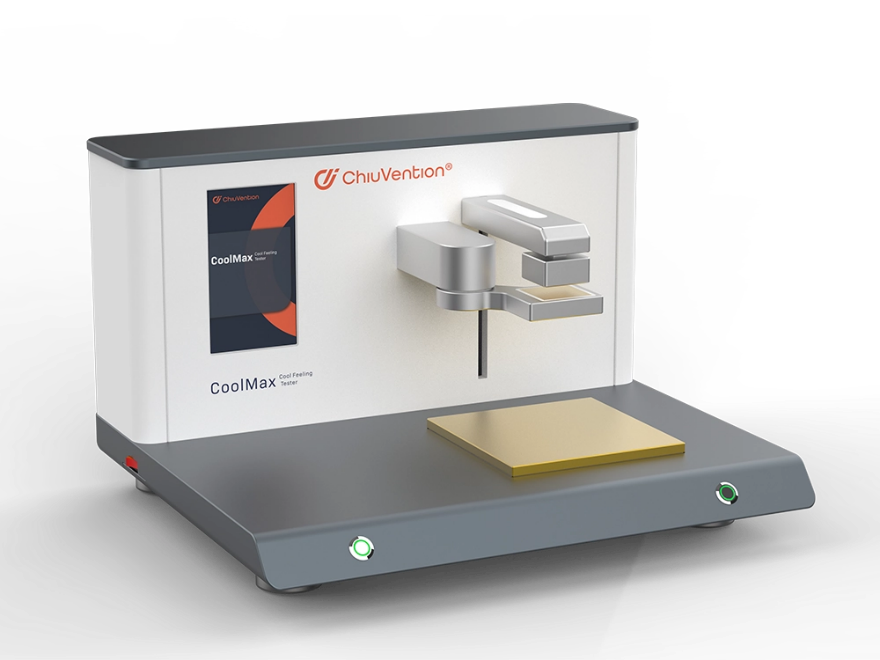
You can’t just rely on a human touch to gauge coolness, as it’s subjective. This is where precision engineering and tools like the Cool Feeling Tester come into play.
The testing process is designed to simulate real-life usage, such as when you put on a shirt on a hot day. Here’s a simplified breakdown of how a Cool Feeling Tester works to determine a fabric’s Qmax:
- Controlled Environment: A fabric sample is placed on a temperature-controlled platform, which is typically heated to around skin temperature (approx. 35°C).
- Simulating Contact: A special sensor head, also kept at a consistent temperature, is brought into contact with the fabric with a fixed, low pressure for a very short period.
- Capturing the Data: High-precision temperature sensors record the instantaneous temperature changes that occur the moment the sensor touches the fabric. This data captures the maximum heat flux—the Qmax value.
- Analysis: Sophisticated software then analyzes the data, generating the final Qmax value. This provides a clear, objective, and repeatable measure of the fabric’s cooling power.
Why is Qmax Testing So Important?
For manufacturers and designers of performance textiles, knowing the Qmax of their materials is essential. It’s not just about claiming a fabric is “cool”; it’s about proving it. Testing ensures:
- Consumer Comfort: It guarantees that sportswear, summer clothing, and activewear will deliver on their promise of breathability and heat dissipation.
- Product Development: It allows developers to compare different materials, finishes, and weaves to engineer the coolest possible fabric.
- Quality Control: It ensures every batch of fabric meets the required performance standards.
Modern testers, like the one mentioned on the product page, even incorporate IoT technology. This allows them to connect directly to smartphones, computers, and laboratory management systems (like ERP and LIMS). This seamless data flow means manufacturers can get timely test reports and make quick, informed decisions, greatly improving overall testing efficiency.
The Future of Cool
As we demand more from our clothing—whether it’s for an intense workout, a summer hike, or just lounging in the heat—the science of fabric comfort becomes even more important. Qmax gives us a tangible way to understand and measure the elusive feeling of coolness.
Next time you look for the perfect summer shirt or high-performance activewear, remember the science of Qmax. It’s the invisible technology working to keep you comfortable, one cool touch at a time.